China Readies Shenzhou-24 Launch With the First Foreign Astronaut Bound for Tiangong
Pakistani air force pilot Muhammad Zeeshan Ali is set to lift off from the Gobi Desert on Wednesday, becoming the first non-Chinese visitor to China’s space station.
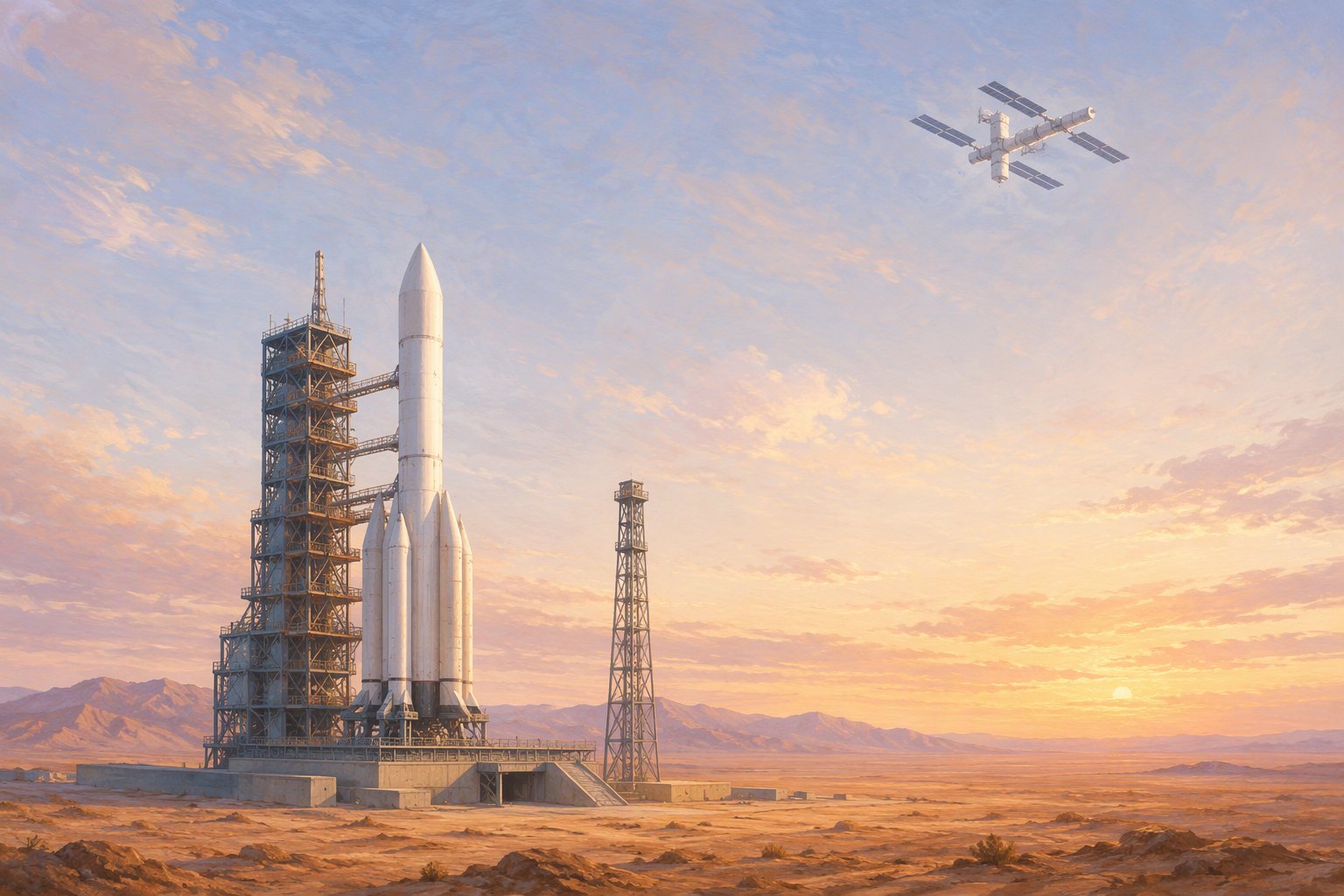
China will launch its Shenzhou-24 mission on Wednesday morning carrying Muhammad Zeeshan Ali, a Pakistan Air Force pilot who will become the first foreign astronaut to fly on a Chinese space mission and the first non-Chinese to board the Tiangong space station, officials said on Tuesday.
The mission is set to lift off at 8:18 a.m. local time (0018 GMT) from the Jiuquan launch center in the Gobi Desert, Zhang Jingbo, a spokesman for the China Manned Space Agency, told a news conference. A Long March-2F rocket will carry the crew — Mr. Ali, 40, flying as payload specialist, alongside Tang Hongbo, 51, a space veteran, and Wu Yi, 39, making his first flight.
“I carry the name of Pakistan on my shoulder, the hopes of 250 million Pakistanis,” Mr. Ali told a separate news conference introducing the crew, speaking in English after remarks in Urdu and fluent Mandarin. “To every child who is watching while I’m in orbit, just look up at the sky and remember that I am up there with your dreams.”
I carry the name of Pakistan on my shoulder, the hopes of 250 million Pakistanis.
The flight plan is unusual. Mr. Ali will make a short orbital stay of about five days before returning to Earth aboard the Shenzhou-23 spacecraft, which has been docked at Tiangong since May, accompanied by two members of the current station crew — Lai Ka-ying, Hong Kong’s first astronaut and the only woman now aboard, and Zhang Zhiyuan. The third current crew member, Zhu Yangzhu, will remain on the station to complete China’s first full-year stay in space, a key endurance test for future lunar ambitions, joined by Mr. Tang and Mr. Wu for the next six-month rotation.
Mr. Ali, an engineering academic and fighter pilot, was selected in April alongside a second Pakistani candidate, Khurram Dawood, under a February 2025 agreement between Beijing and Islamabad, and trained at China’s astronaut center in Beijing. Pakistani officials celebrated the mission: Information Minister Attaullah Tarar called it “a source of joy and pride for the entire nation,” and Planning Minister Ahsan Iqbal said it underscored the “iron brotherhood” between the two countries. “China and Pakistan are all-weather strategic cooperative partners,” a Chinese foreign ministry spokesman, Guo Jiakun, said.
The mission is a milestone in China’s space diplomacy. Barred from the International Space Station since 2011, when the United States banned NASA from collaborating with Beijing, China built Tiangong as its own orbital outpost and has said it aims to land astronauts on the Moon before 2030. Mr. Zhang said the rocket would soon be fueled and that the crew and station were ready for the flight.